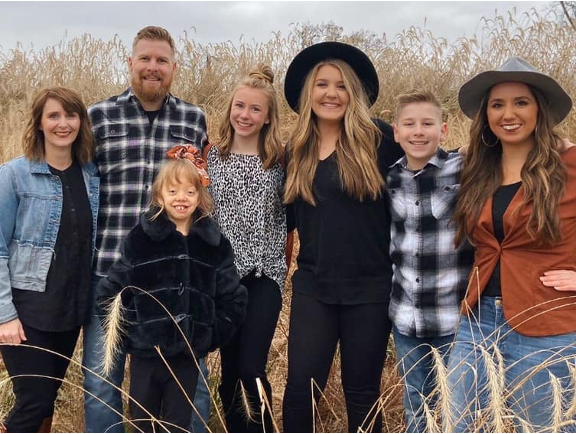
In 2001, Tim and Melissa Kern traveled to Helena from Dillon Montana with Curtis Cole, campus minister at University of Montana–Western (UMW) to check out Carroll College. Curtis and Delyn Freeman Cole were their XA pastors and mentors who invested years in them as students at UM-W. Tim and Melissa were 26 years old and were toting around their daughter Hannah Kern who was 1 month old. That day, God birthed in them a calling to pioneer Chi Alpha at Carroll College, a private Catholic campus. Pastors Ken Ross, Norm Christofferson and Paul Feuerstein were incredible mentors and supportive of XA along with so many other pastors in Helena and Montana that helped them start XA. Levi Mielke was their first student who transferred to Carroll to help the Kerns pioneer the ministry. Emily Roehm was their first full time associate staff and Haylee Petrusha and Haley Feuerstein were their first students to “give a year” back to XA at Carroll. Keith Elder, district youth director for Montana, challenged and appointed the Kerns to establish XA at Carroll College.
Nick & Haylee Petrusha and their team took over the ministry at Carroll College. Tim and Melissa received national missionary appointment in 2013, to relocate to South Bend, Indiana to pioneer another private Catholic University, University of Notre Dame and they have! They also began ministry at the Indiana University at South Bend and St. Mary’s College.
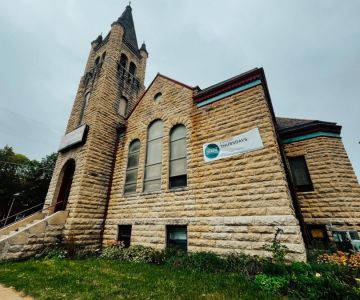
John Konkel is a Chi Alpha campus pastor at the University of Minnesota. When he started in 2005, he walked by frat row and God placed a burden on his heart. Was anyone reaching out to these guys?
He asked, “How does a campus minister (chaplain) get invited into frat houses, which have a stereotypical reputation for not being havens of morality?” John felt God impressed him to grab a toilet bowl brush, some cleaning supplies, and start making phone calls and knocking on frat house doors.
“I started by just cleaning toilets,” John says. “Then I grabbed a Chi Alpha student, and we spent the summer cleaning frat houses free; we’d vacuum, wash dishes, clean toilets, and while we were at it, we’d build relationships with those guys.”
“I wanted to pitch the idea of having a chaplain to a lot of the fraternities on our campus, but I needed an invitation to attend the yearly frat council meeting,” John said. He started by calling frat presidents, and one of them responded. The frat president wasn’t walking with the Lord, but something had been stirring in his heart to read the Bible. He thought having a chaplain for his frat would be a good idea. He took the idea to his chapter, and they voted on it. They agreed it was a great idea! That was 2007.
“For the next 15 years, every year, I’m permitted to attend the frat council meeting and pitch to all the frats the idea of having a chaplain,” John says. “What I’ve found is that after I make that pitch, especially the last three years, students have contacted me as they’re dealing with things like anxiety, depression, addictions, suicidal thoughts, alcohol — underneath it all is a hunger for Jesus!”
John shares that two years ago, he led 16 frat members to the Lord. Last year, in a unique COVID year, he led 20 to the Lord. This year, he’s already seen 38 frat guys make commitments to the Lord as their Savior in just the first semester!
“I could speak at a chapter last week, my last chapter for the semester,” John says. “This frat has a yearly initiation process and now that includes a spiritual direction night that I’ve been able to lead in the last two years!”
“There are few subcultures on the college campus larger or more impactful than fraternities and athletes,” John says. “On the weekends, a huge chunk of what student life looks like is tied up in sporting events or Greek parties. What if God comes and breathes life into these subcultures? That can transform a university!”
Since reaching out to fraternities by cleaning toilets, John says he has now become the chaplain for many of the fraternities on campus. He can freely walk into a meeting where he is known and recognized. And as a fraternity chaplain, they permitted him to engage other fraternities that don’t have a chaplain.
“What’s really great is that recently I had a frat president contact me after a meeting,” John says. “He wanted to start a Bible study, just him and me. After a while, I encouraged him to invite other frat brothers, and now we have eight guys coming. And when that president transitioned out of leadership, the new president joined our group.”
“Imagine,” John muses, “frats taking leadership in leading campuses to Christ — it’s almost like planting an indigenous church.”
________________
Ryan Foster, is the primary Chi Alpha campus minister at the University of Minnesota, leading the typical Chi Alpha model with undergraduates and small groups, while John Konkel (in the article above) works in partnership with Chi Alpha and focuses on Greek life and athletes.
This is a condensed version of a full article that appeared in the AG News, January 3, 2022, “Chi Alpha Chaplain Leads Dozens of Frat Members to Christ,” by Dan Van Veen.
Brady came as a student in the fall of 1969 as a non-believer. He came to faith in fall of 1970 through a fellow student. A group of students and young believers, we started the college ministry in the spring of 1972. Brady graduated at the end of fall quarter in 1973 with a BA in Secondary Ed. and returned in the end of winter quarter of 1974 as a campus minister. Forty-five years later, Brady ended his full-time career as a campus minister at Western Washington University. He was the longest serving Chi Alpha campus minister at one campus his entire adult ministry.
After he graduated from WWU with my Secondary Education degree, I had a very unexpected encounter with the Lord. “I worked late nights in my janitor business. Over three nights as I was driving alone, the Lord was very present to me. The third night, this mental picture came to me of Western all lit up on the hill it sits on overlooking Bellingham.” Then Jesus’ words about “a city on a hill could not be hidden” entered my mind and left me with the question to the Lord, “Do you want me to go back to Western?” It was an idea he had never thought of doing.
He wasn’t raised with much church background. He was a Jesus person planning on teaching. The Lord said yes to his question. He had a deep sense of peace at that moment. He asked, “how does one go back?” He told the Lord, “If You open the door, I will go back.” The following Sunday Brady was invited to visit a church he had never attended. Following the service, the pastor (Richard Ellison), asked Brady out for a burger. The pastor was aware of Brady’s involvement in campus ministry. The Lord had put Brady on the pastor’s heart a couple of weeks earlier, and the pastor had gone to his board and received permission to approach Brady to see if he was interested in returning to campus and if so the church (Hillcrest Chapel—a church of about twenty members at that time) would be willing to help make it possible. Brady became the Wednesday night service teacher, and an offering was taken to help him do campus missionary. He went back to the campus that spring term, and the rest is history.
Brady draws upon his years of ministry to offer keys to your longevity in campus ministry: Continuing to breathe and staying put in the same place will do it. Don’t move because of positive or negative traumatic events. Move because you are fully convinced you are called by the Lord to move. I heard him call me to WWU, and I have continued in that call. There have been times of review and consideration of other invitations, but only in the attempt to discern if I am to move. So far no new orders have come.
Reject false assumptions. One of my favorites was the assumption some had that because I was successful as a campus pastor I should cash in that reputation and get a job as a lead pastor of a local church. Assumption: real pastors lead local churches. Another is that older folks can’t do campus ministry. It may be true that we will need younger men and women partnering with us, but my campus has a significant number of professors who are in their sixties or beyond. Oftentimes they are the folks with the greatest impact in their departments.
Keep the Sabbath. The central concern is not which day of the week I take as a day of rest. But I do believe that not having a minimum of 24 uninterrupted hours each week works against our spiritual, mental, and physical health over the long run.
Surround yourself with people of prayer, insight, truth telling and shared vision. Keep your inquisitive learning spirit alive. Be a perpetual reader of thoughtful and broad topics related to your faith, as well as to the culture and world you find yourself seeking to make a difference in. Campus ministry often feels fast and furious. The feeling of redundancy can press folks to look for something that has a longer lifespan than 30 intense weeks and perpetual transition of a significant number of your community each year. I have found it essential to remind myself that while the questions oftentimes are the same from each entering group of new students, and I have heard my answers to them many times before, this new young student in front of me may have never heard a helpful answer before and certainly not in the environment of the secular university. This awareness on my part keeps my mind and heart fresh and thankful for the opportunity to be strategically placed to impact another life that finds him/herself searching for answers to the great questions of life. I may help them keep their untested faith in the test of the university, or I may sow a seed that will germinate and grow into a later commitment that will impact the person’s earthly legacy and their ultimate destiny.
Excerpted from https://campusministry.org/article/qa-with-brady-bobbink January 8, 2018