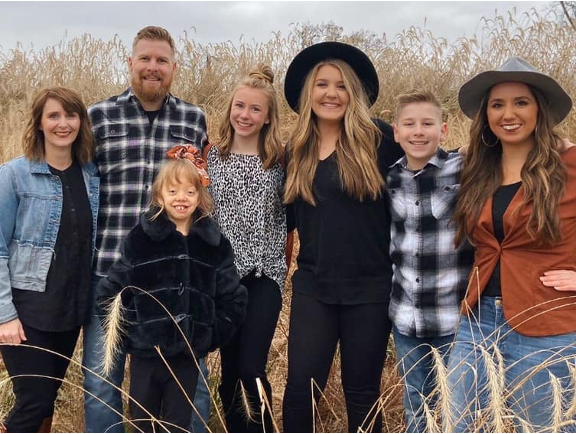
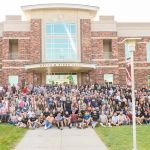
In 2001, Tim and Melissa Kern traveled to Helena from Dillon Montana with Curtis Cole, campus minister at University of Montana–Western (UMW) to check out Carroll College. Curtis and Delyn Freeman Cole were their XA pastors and mentors who invested years in them as students at UM-W. Tim and Melissa were 26 years old and were toting around their daughter Hannah Kern who was 1 month old. That day, God birthed in them a calling to pioneer Chi Alpha at Carroll College, a private Catholic campus. Pastors Ken Ross, Norm Christofferson and Paul Feuerstein were incredible mentors and supportive of XA along with so many other pastors in Helena and Montana that helped them start XA. Levi Mielke was their first student who transferred to Carroll to help the Kerns pioneer the ministry. Emily Roehm was their first full time associate staff and Haylee Petrusha and Haley Feuerstein were their first students to “give a year” back to XA at Carroll. Keith Elder, district youth director for Montana, challenged and appointed the Kerns to establish XA at Carroll College.
Nick & Haylee Petrusha and their team took over the ministry at Carroll College. Tim and Melissa received national missionary appointment in 2013, to relocate to South Bend, Indiana to pioneer another private Catholic University, University of Notre Dame and they have! They also began ministry at the Indiana University at South Bend and St. Mary’s College.
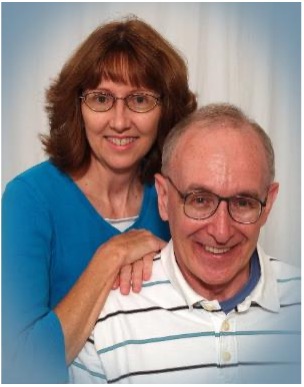
Steve graduated from Georgetown University and served three years active duty in the U.S. Army. He was led to the Lord by a college student and experienced a dramatic conversion to a real faith in Jesus Christ. Steve received divine direction to State College, Pennsylvania, home of Penn State University. He began doing outdoor preaching. He became a member of the local State College Assemblies of God church, pastored by Rex Bornman. Rex asked Steve to organize a XA group at Penn State. Steve would direct XA a from 1980 to 1985. During that time, he met and married Charlene Bernhardt in 1984 who had come to PSU from Evangel University to pursue a Masters degree.
In 1990, Pastor Arnold Lastinger invited Steve to preach two services at the First Assembly of God in Gainesville, Florida. He was looking for someone to develop XA at the University of Florida. The pastor then referred him to the AG Peninsular Florida District Council (PFDC) in Lakeland for an interview. The district presbyters approved Steve as the first full-time XA campus minister in Pen Florida.
Steve and Charlene implemented the XA principles of prayer, worship, discipleship, fellowship, and evangelism as a foundation for university ministry. XA meetings were held on campus. Student leaders equipped their peers for spiritual growth. Bible studies met in dorms and apartments. Those with musical gifts led in worship. Over the years, hundreds of students participated in the UF XA ministry. They witnessed salvations, water baptisms, fillings with the Holy Spirit, and healings.
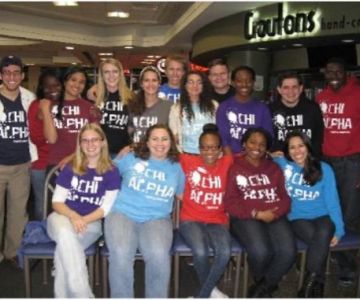
Chi Alpha students at the University of Florida
UF influences students from many nations and cultures and with a diversity of backgrounds. For twenty-five years (1991 – 2016), they directed XA at UF. In 2016 Steve (age 71) and Charlene stepped away from full-time XA to focus on international students and scholars representing fourteen nations. Through the years, UF XA students have traveled to fifteen countries on mission trips. Here at home, students helped hurricane victims in New Orleans and migrant workers in South Florida.
The global impact of campus ministry is represented by a journalist who came to UF from Taiwan on a Fulbright scholarship. Her major was media management. One day, she called the Michaels to let them know that she was setting aside three days to seek the Lord, and wanted to meet to talk about the Holy Spirit. She received the baptism with the Holy Spirit in the Michaels living room after a Bible teaching from Acts! This scholar returned to her nation knowing that Jesus gave “power from on high” to be a witness to her unsaved family and her nation.
National XA provided the Michaels with an opportunity to fulfill God’s assignment. The network of relationships and oversight helped them to continue these many years. Steve explained, “We are grateful to the Lord, our supporters, and all the college students who made this mission an exciting adventure!” At 75, Steve’s ministerial credential card reads, “Senior Retired,” however he and Charlene continue to minister to internationals as retirees.
A Chi Alpha Story from the University of Wisconsin Madison
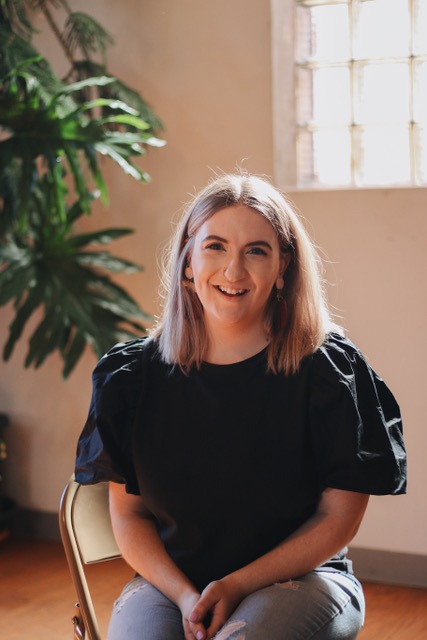
Abigail Sawczak, campus minister, UW Madison, and New Culture Church
It’s amazing what God can do with a simple yes. I grew up in Northwest Indiana and, from a young age, felt drawn to missions and ministry. Yet when it came time for me to graduate from North Central University with my degree in Pastoral Studies, I had no clue what I wanted to do next. All I knew was that I wanted to help people far from Jesus draw close to Him again. During this season I heard about Madison, Wisconsin, and a team going there to re pioneer a Chi Alpha. I knew very little about Chi Alpha, but when I heard about how many students were at the university that didn’t know Jesus and how unreached the city was, I knew that’s where I wanted to be. So, at 21, I packed up my car, signed a lease without visiting, and moved in August 2016 just weeks before school started. I didn’t have the experience or qualifications. All I had was my yes. I have learned so much about campus ministry through attending the Chi Alpha’s annual Reach the University Institute and the Great Lakes regional student and staff gatherings.
After just one year on campus, I knew that this was what I wanted to give my life to. Every year it got better. Hundreds of students were coming through our doors and many decided to follow Jesus, get baptized, and follow Him all the days of their lives. Since re pioneering in 2016, students have started bible studies in their workplace, lead family members to the Lord, and even go into ministry themselves. However, saying yes to help re pioneer at UW Madison was the first of many yeses I would be saying.
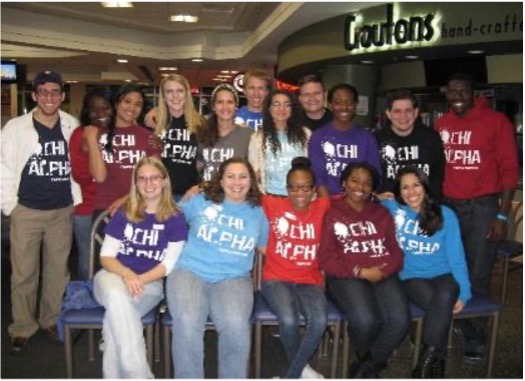
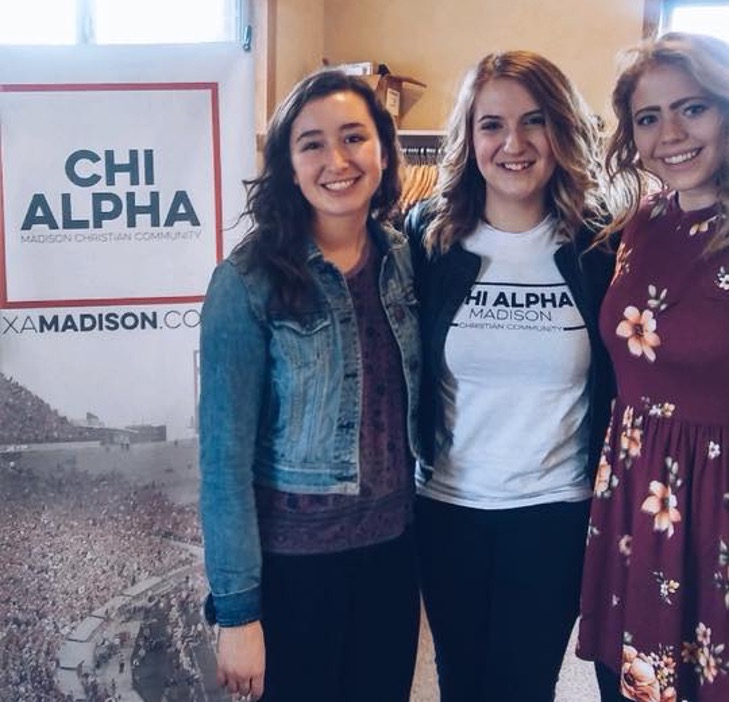
UW Madison Chi Alpha (Abigail center)
In 2018, I planted New Culture Church to continue to reach the downtown and university community in Madison. New culture has created a space for nontraditional students, such as grad or PhD students, to plugin, as well as help students fall in love with the local church. Proximity to the campus was important, so I commit us to having the church close enough for students to walk or take campus transportation. We started the church in one of the biggest nightclubs in Madison and signed a lease for two large spaces, one for The Sanctuary and the other for a community/ student center next to campus.
In 2020, during a global pandemic, we pioneered at Edgewood College, and even through following all the COVID guidelines, we have seen the group grow every semester. Finally, in 2021, in partnership with our church plant, we opened “The Living Room”, a community/ student center. We opened this past fall, after raising $50,000 to renovate and getting the place ready to open to the community. We have hosted worship nights, prayer groups, small groups, international student events, and we open the student center daily so students can study during the week.
If you would have told me that five years in, we would be on two campuses, have a church plant, and a large gathering place for students, I wouldn’t have believed you. Or, I wouldn’t have said yes. The story of Chi Alpha Madison is a story that only Jesus can write. And it has been the honor of my life to continue to say yes to that story. One person, one place at a time. I can’t wait to see what He will do in the next five years and the people He will use to do it.
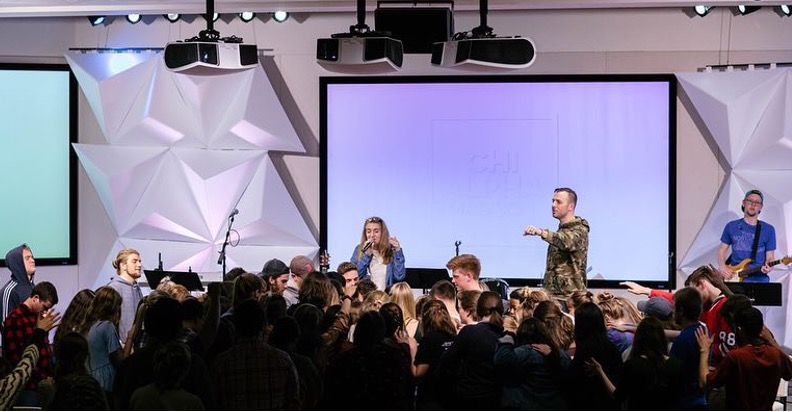
Chi Alpha Worship and Teaching Service at University of Wisconsin Madison